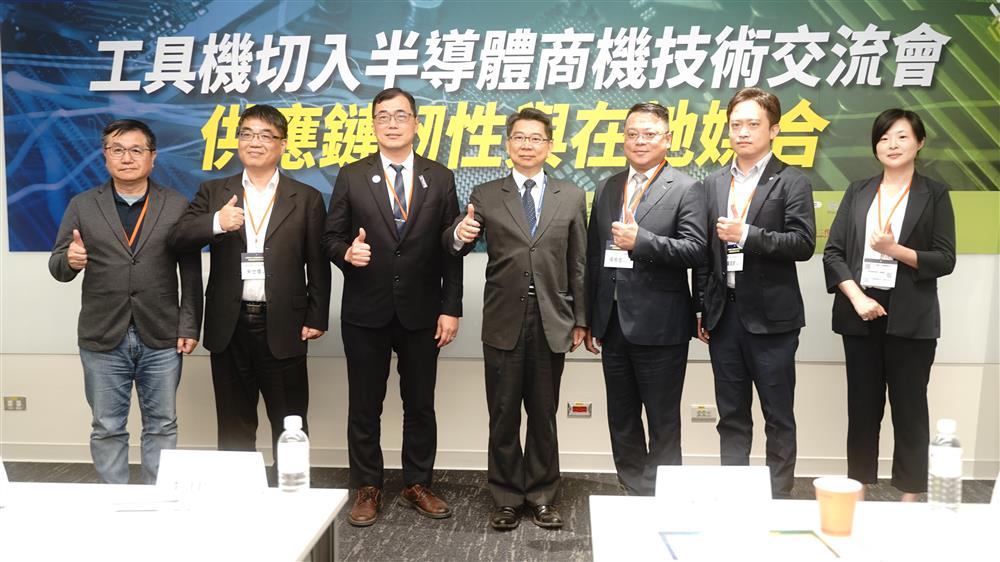
Figure 1. Group photo of the Government officials and industry leaders.
During the Taiwan International Machine Tool Show (TMTS 2026), held grandly for the first time at the Taichung International Exhibition Center this year, Hantop Intelligence Tech was invited to participate in a technical seminar event hosted by the Ministry of Economic Affairs of Taiwan (MOEA), and the Precision Machinery Research and Development Center (PMC). This event brought together leaders across the semiconductor industry to deliver keynote speeches. The event was highly anticipated and the venue was fully packed with experts from all over the world.
Mr. Shih-Huang Chu, Senior Director of Hantop Intelligence Tech, was invited to deliver a keynote speech titled "Transitioning from Metal to Ceramic and Hard-Brittle Material Machining," addressing the current transition challenges faced by the machining industry. Through case studies of one of our major clients, he provided an in-depth analysis of how traditional metal machining companies successfully capitalized new supply chain business opportunities in the semiconductor and AI era by introducing Hantop's Ultrasonic Technology!
The Crossroads of Traditional Precision Machining: Embracing the AI Chip Opportunity
In recent years, the precision machining industry has faced immense challenges. Market competition is intensifying, and the profit margins are gradually shrinking to suffocating levels.
Amid the surging demand for AI chips, many machining factories have shifted their focus to high-end materials required for semiconductor equipment and advanced packaging, securing new orders for "semiconductor-grade ceramics. "!
The Invisible Hero Behind AI Computing Power: Why Ceramic?
As the performance of AI chips driven by leading companies like NVIDIA continues to double, advanced packaging technologies (such as CoWoS, CPO, etc.) and thermal management have become the critical factors determining whether computing power can be stably exerted.
Key Indicator 1: The Extreme Demand for Coefficient of Thermal Expansion (CTE)
When facing the extreme high temperatures and plasma environments of AI chips, traditional metal materials are often limited by mismatched Coefficients of Thermal Expansion (CTE) or poor corrosion resistance, which can severely shorten the lifespan and cause damage and failure to precious AI chips.
Key Indicator 2: Material Stability in Harsh Environments
Therefore, silicon carbide (SiC), aluminum oxide (Al2O3) ceramics, and composite materials like aluminum silicon carbide (AlSiC), which possess excellent thermal properties and stability, have become the top choices for AI chip heat dissipation substrates, test fixtures, and semiconductor equipment components. This wave has brought new opportunities to the precision machining industry, but it has also introduced entirely new challenges.
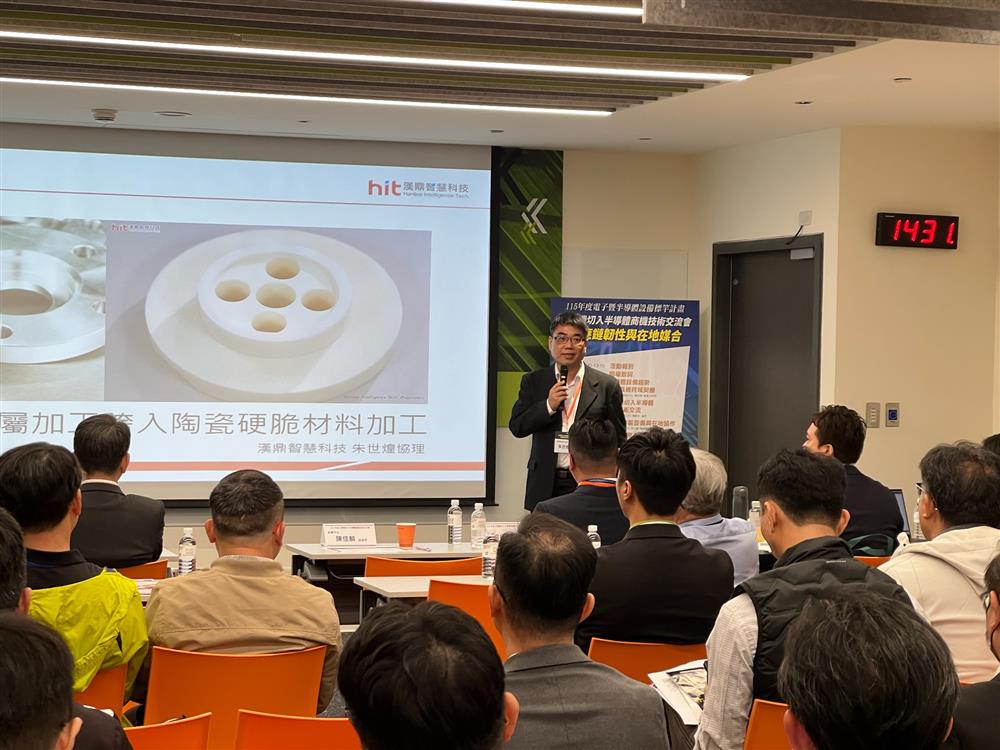
Figure 2. Senior Director Shih-Huang Chu delivered the keynote speech
With Great Opportunity Comes Challenges: Why is Ceramic So Difficult to Handle?
However, with great opportunity comes great challenges.
Case Study: A Story of Blood, Toil, Tears and Sweat
Director Chu shared a case study during his speech: In early 2025, a machining factory specializing in "Metal Heat Dissipation Plates" actively sought transformation as it faced “Red Ocean” competition with declining gross margins. In the second half of the year, they finally managed to secure a sampling order for ceramic materials, only to fall into months of painful trial and error. "They cross-tested all the cutting tools and other key parameters relentlessly, but the results were constant failures," Director Chu mentioned. The most common situations were: severe chipping on the ceramic edges and severe tool wear.
The Fundamental Difference in Material Properties: Hardness vs. Fracture Toughness
The scientific reason behind lies in the huge difference in material properties: ceramics have very high hardness but low fracture toughness. If you approach it with the traditional metal "cutting" mindset, it's like a collision course—it breaks upon contact. This forced them to undergo its first paradigm shift: transitioning from the "removal" to the "brittle abrasive" mechanism, changing from cutting to micro-grinding.
Table 1. Comparison of Material Hardness and Fracture Toughness
| Material |
Mohs Hardness |
Fracture Toughness (Mpa*m^1/2) |
Description |
| Diamond |
10 (Maximum) |
Very Low (1.5 ~ 5) |
The hardest but also very brittle. Capable of cutting all materials, but highly susceptible to "brittle fracture" (chipping) when subjected to vibration or impact. |
SiC, Al2O3,
Tungsten Carbide(WC) |
9 ~ 9.5 (Very High) |
Extreme Low (Approx. to 0) |
Extremely high hardness and shatters easily upon impact. Similar to glass or ceramic, it is difficult to machine and typically requires ultra-hard cutting tools. |
| Hardened Steel, Chromium (Cr) |
8 ~ 8.5 (High) |
Moderate |
Possesses both a certain level of hardness and the basic toughness of metal; more difficult to cut than general steel. |
General Steel
(e.g., SUS Stainless Steel) |
4 ~ 5 (Moderate) |
Very High (200+) |
Extremely tough. It will dent and deform under heavy impact but is not prone to complete fracture; it is the most common engineering material. |
| Aluminum (Al) |
3 (Low) |
High |
Soft in texture with good ductility and toughness; relatively easy to cut and machine. |
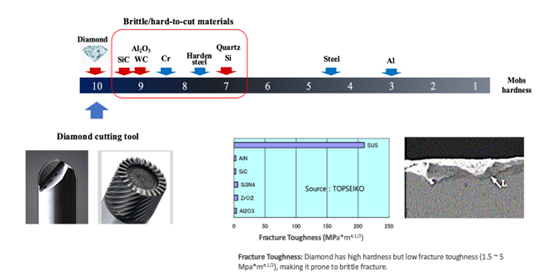
Figure 3. Explanation of the differences in characteristics between hard-brittle materials and traditional metal materials.
The Devil is in the Details: Why Changing to Diamond Tools is Not Enough?
Many business owners believe that replacing their tools with diamond grinding pins can solve the problem, but in actual combat, they encounter a more hidden challenge.
The Hidden Challenge: Powder Adhesion
The client found that after switching to diamond tools, it seemed to be alright at the first glance, but after a few runs, it started to go wrong again. Upon removing the tool, they discovered that the finely ground ceramic powder was firmly stuck to the diamond particles. When the diamonds are covered by powder and their exposure is insufficient, the tool completely loses its grinding ability. This is exactly the core reason why "just changing the tool is not enough; a new method must be introduced: Ultrasonic Technology."
Solving New Problems Requires New Methods and a "Paradigm Shift"
To successfully enter the field of hard-brittle materials, challengers must undergo a complete paradigm shift:
-
Shift in machining methods: From traditional "cutting" to "grinding".
-
Shift in tool selection: From general-purpose tungsten carbide tools, a full upgrade to "diamond tools".
-
Shift in material machining concept: From the "removal" to the "brittle abrasive" mechanism adapted for hard-brittle materials.
In this process, how to balance machining efficiency and cutting force, while perfectly controlling surface quality and suppressing material cracks, has become the decisive task for improving yield rates.
Hantop's Solution: The "Self-Sharpening" Magic of Ultrasonic Technology
To solve the problems of powder adhesion and machining efficiency, the client ultimately introduced Hantop's ultrasonic-assisted machining module.
Revolutionary Breakthroughs Driven by 20,000+ High-Frequency Micro-Vibrations
Through high-frequency micro-level vibrations of over 20,000 times per second, it brought a revolutionary breakthrough to the machining process:
Breakthrough 1: Tool Self-Sharpening
The microscopic mechanism generated by high-frequency vibration can shake off the underlying binder, allowing new diamond particles to be continuously exposed, ensuring the tool always remains in its sharpest state.
Breakthrough 2: Smooth Chip Removal
The vibration mechanism can effectively shake off and carry away the ceramic powder, avoiding scratches on the workpiece and completely solving the downtime problem caused by powder adhesion.
Breakthrough 3: Stress Elimination and Resistance Reduction
Significantly reduces cutting resistance and residual stress, minimizing the incidence of ceramic edge cracks.

Figure 4. The principles of ultrasonic-assisted machining.
The Invisible Key to Successful Transition: The Entrepreneurial Spirit
The Determination to Believe You Can Do It
At the end of the speech, Director Chu emphasized that technical equipment is just a tool, and the true key to a successful transition lies in the "Entrepreneurial spirit of believing you can do it." The road to ceramic machining will inevitably encounter challenges, but for those business owners who view problems as a "necessary process" and actively seek solutions, it is only a matter of time.
Seamless Upgrades for Existing Machines to Achieve Dual-Capability
The role of Hantop Intelligence Tech is to provide the most stable ultrasonic modules that are compatible with over 90% of CNC machine brands, allowing business owners to smoothly upgrade without investing in costly specialized equipments, realizing a multi-capable production line that "can handle both hard-brittle materials and metals." On the path to the high-value-added semiconductor and AI market, we back you.
Let us help you overcome the threshold of hard-brittle material machining through technology upgrades, accurately positioning you into the global AI supply chain!
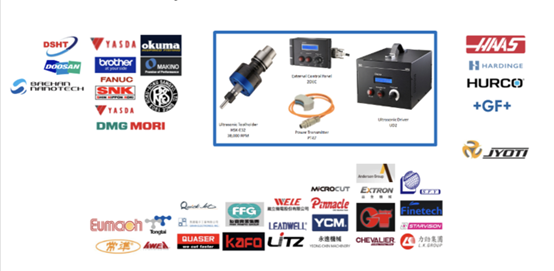
Figure 5. Examples of machine tool brands compatible with Hantop's ultrasonic-assisted machining module.
📧Contact Us: Consult on ultrasonic solutions for hard-brittle materials!
💡Click here to learn about more cases💡
💡Click here to request for product catalog💡
TEL:+886-4-2285-0838
EMAIL:sales@hit-tw.com